When you prioritize Heavy Equipment Safety, you aren’t just ticking a box for compliance—you are protecting your team and your bottom line. Accidents cost money, damage equipment, and ruin reputations.
The truth is – construction and industrial sites are loud, busy, and full of moving parts. But nothing grinds a project to a halt faster than an accident. Did you know that the construction industry accounts for a significant chunk of workplace injuries every year? It’s a hard truth, but many of these incidents are entirely preventable.
Establishing a strong safety culture isn’t just about following rules; it’s about making sure everyone goes home to their families at the end of the day.
This guide breaks down the massive topic of Heavy Equipment Safety into manageable chunks. We will look at what you need to do before you even turn the key, how to handle the machine while it’s running, and how to manage the site itself. We have distilled these best practices into 7 Essential Rules that every operator and site manager needs to know.
Essential Rule 1: Master the Pre-Operation Inspection
You wouldn’t drive your car across the country without checking the oil or tires, right? The same logic applies here, but the stakes are much higher. A thorough daily safety checklist for heavy equipment is your first line of defense against mechanical failure.
The Daily Walkaround Checklist
Before you climb into the cab, you need to walk around the machine. It sounds simple, but this step is often skipped when people are in a rush.
- Fluids: Check the engine oil, hydraulic fluid, coolant, and fuel levels. Look for puddles on the ground that might indicate leaks. A small leak now can turn into a blown hose and a massive spill later.
- Tires and Tracks: If you are on wheels, check for cuts, bulges, and proper inflation. For tracked machines, look for loose bolts or damaged pads in the undercarriage.
- Safety Systems: Test the horn, backup alarms, and lights. These are your voice on a noisy job site.
- Visibility: Clean the windows and mirrors. You can’t avoid what you can’t see.
Key Safety Feature Check
Once you are in the seat, don’t just start working. Test the brakes, steering, and joystick controls. Does the joystick stick? Is the steering loose? Catching these issues during your daily safety checklist for heavy equipment routine prevents you from finding out about them when you have a full load in the bucket.
Lockout/Tagout (LOTO)
If you find something wrong, do not just leave it for the next guy. Tag it out. LOTO procedures ensure that a broken machine isn’t accidentally started while someone is trying to fix it.
Essential Rule 2: Enter and Exit Safely
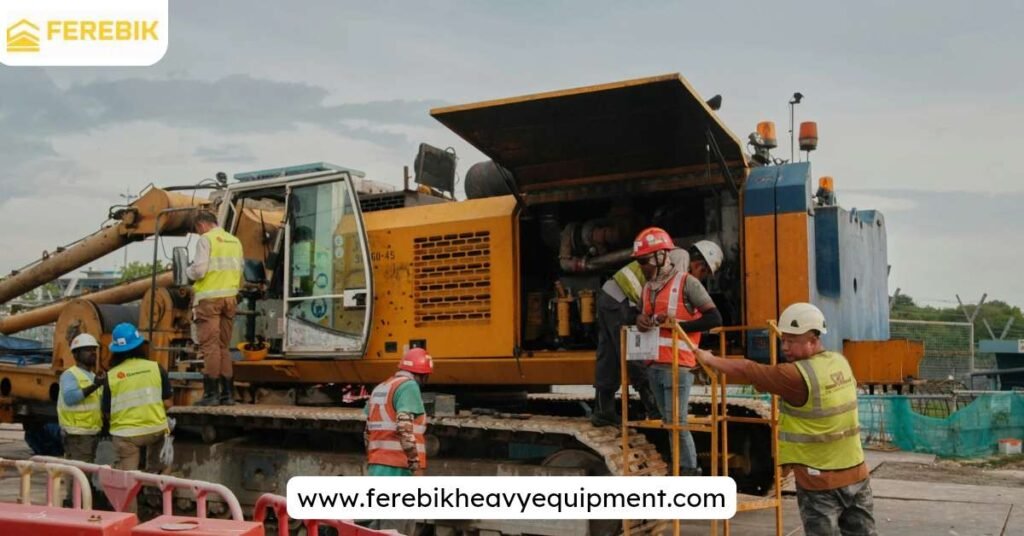
It sounds almost too simple to mention, but getting on and off the machine is where a surprising number of injuries happen. Operators slip on mud, miss a step, or jump down and twist an ankle. The industry standard solution is the 3 point contact rule for heavy equipment.
The 3-Point Contact Principle
The 3 point contact rule for heavy equipment is non-negotiable. It means you always have three points of contact with the machine—either two hands and one foot, or two feet and one hand—while you are climbing. Imagine you are climbing a ladder; you wouldn’t let go with both hands, would you? Treat your excavator or dozer the same way.
Common Hazards
Rain, mud, and grease make metal steps slippery. Always check your boots before you climb. And here is a big one: never jump. Jumping from the cab puts massive stress on your knees and back. Over a career, that adds up.
Best Practice
Face the machine. Always. If you face away from the equipment, you shift your center of gravity and increase the chance of a fall. Also, never carry your lunch box or tools while climbing. Hoist them up afterward or use a tool belt. You need your hands free to maintain the 3 point contact rule for heavy equipment.
Essential Rule 3: Maintain Visibility and Manage Blind Spots
Big machines have big blind spots. Whether you are running a loader or a dump truck, there are areas around you that you simply cannot see from the cab. Avoiding blind spots on construction equipment is a team effort.
The Blind Spot Challenge
Every machine is different. On an excavator, the blind spot is often to the right and rear. On a large dump truck, it might be directly in front of the bumper. Operators need to know these zones instinctively.
Implementing a Spotter System
Technology like backup cameras is great, but it doesn’t replace a human set of eyes.
- When to use a spotter: Anytime you are backing up in a tight space or working near overhead hazards like power lines.
- Communication: You need clear signals. Standardized spotter hand signals for heavy machinery are critical. If the operator doesn’t understand what “stop” looks like, you are in trouble. If you lose sight of your spotter, stop the machine immediately.
- Radios: Two-way radios are even better than hand signals, provided the batteries are charged.
Site Traffic Management
One of the best ways to assist with avoiding blind spots on construction equipment is to separate people from machines. Use barrier tape or fencing to create a “swing radius” or exclusion zone. If people aren’t in the danger zone, they can’t get hit.
Essential Rule 4: Adhere to Load Limits and Operational Guidelines
Pushing a machine beyond its limits is a recipe for disaster. It causes premature wear and tear, and it puts the operator in immediate physical danger.
Knowing the Equipment
Every machine has a specific purpose. You wouldn’t use a screwdriver to hammer a nail. Similarly, you need to know the specific capabilities of the iron you are using. This is where partnering with a reputable supplier becomes an advantage.
Companies like Ferebik Heavy Equipment understand this balance well. Because they provide well-maintained, modern machinery for rent and sale, they often ensure the equipment comes with clear documentation and specs. When you source from a partner that prioritizes equipment health, you are already one step ahead in safety. You know the brakes will work, and the hydraulic capacity is exactly what the manual says it is. Using reliable gear from a trusted name like Ferebik means you aren’t second-guessing the machine’s integrity halfway through a lift.
Load Capacity (Rated Load)
Always check the data plate. Never exceed the Safe Working Load (SWL). If you try to lift a pipe that is too heavy, you risk tipping the machine or snapping a cable. It is physics, and physics always wins.
Stability and Rollover Prevention
Rollovers are terrifying and often deadly.
- Ground Conditions: operates on level ground whenever possible. If the ground is soft, use mats.
- Slopes: Be extremely careful on slopes. Drive straight up or down, never across the face of a steep hill.
- Seatbelts: This is your last line of defense. If the machine rolls, the seatbelt keeps you inside the protective cage (ROPS) rather than letting you fall out and get crushed.
Essential Rule 5: Utilize Site-Wide Safety Protocols
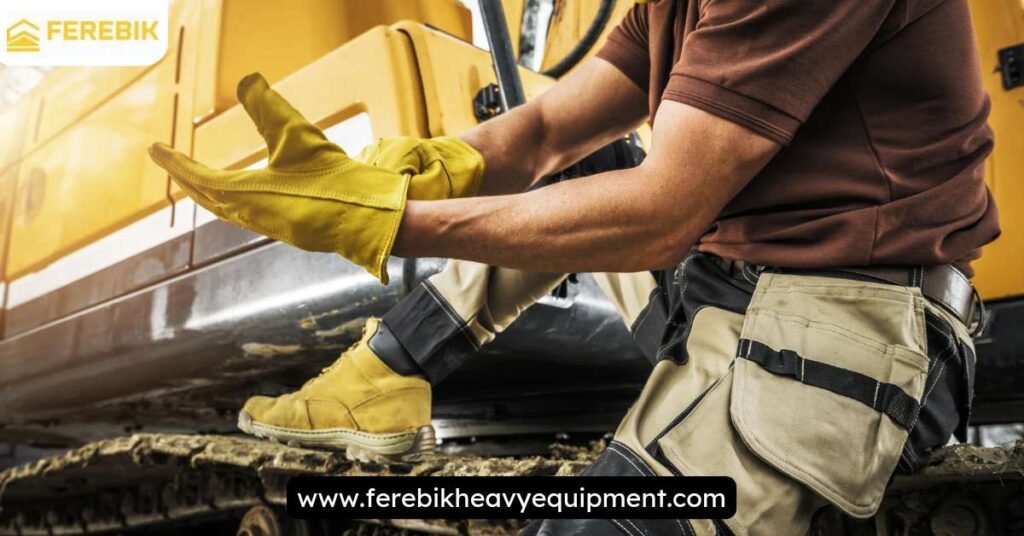
Heavy Equipment Safety isn’t just about the driver; it’s about the environment.
Personal Protective Equipment (PPE)
PPE is the uniform of the professional.
- High-visibility clothing: You need to be seen.
- Hard hats and Steel-toes: Protect your head from falling debris and your feet from crushing impacts.
- Hearing Protection: Heavy diesels are loud. Protect your hearing now so you don’t lose it later.
Hazard Awareness
Look up. Electrocution is a major killer on construction sites. Always know where the power lines are and maintain the required clearance distance. OSHA has strict guidelines on this—check out their crane and derrick safety standards for specifics.
Also, look down. Trench collapse is a real risk. Never park heavy machinery right on the edge of a trench unless it is shored up properly.
Environmental Factors
Weather changes how machines behave. Rain turns hard pack into grease. Cold weather makes hydraulic lines brittle. Adjust your driving style to match the conditions. Avoiding blind spots on construction equipment becomes even harder in fog or heavy rain, so slow down.
Essential Rule 6: Implement Proper Shutdown and Securing Procedures
The day isn’t over until the machine is safe. A proper heavy equipment shutdown procedure ensures the machine is ready for tomorrow and won’t hurt anyone tonight.
Post-Operation Checklist
Do not just kill the key and jump out.
- Park on Level Ground: Don’t rely on the parking brake alone to hold a 20-ton machine on a hill.
- Lower Attachments: Drop the bucket, blade, or forks to the ground. This relieves hydraulic pressure and prevents gravity from bringing them down on someone later.
- Cool Down: Let the engine idle for a minute or two. This helps the turbocharger cool down and extends engine life.
- Secure the Machine: Lock the cab. This prevents vandalism and unauthorized joyrides.
Following a proper heavy equipment shutdown procedure every single time builds a habit of safety.
Essential Rule 7: Prioritize Operator Training and Certification
You cannot learn how to handle heavy equipment safely just by watching a YouTube video. Real skill comes from formal training and experience.
The Legal and Moral Imperative
It is often a legal requirement to ensure operators are certified. But more than that, it is a moral duty. An untrained operator is a danger to themselves and everyone else. For detailed training requirements, refer to the OSHA training requirements page.
Training Types
- Certification: Get certified on the specific machine you are using. A forklift is not a backhoe.
- Refresher Courses: Standards change. Machines change. Regular refreshers keep you sharp.
- Toolbox Talks: These are short, daily safety briefings. Use them to discuss specific hazards for the day, like spotter hand signals for heavy machinery or changes in site traffic.
Fatigue Management
Operating heavy iron requires focus. If you are tired, your reaction times slow down. Site managers need to ensure operators are taking breaks. For more on the dangers of workplace fatigue, the National Safety Council has excellent resources.
Conclusion
Safety on a job site doesn’t happen by accident. It happens because people care enough to follow the rules. By adhering to Heavy Equipment Safety protocols—from the daily safety checklist for heavy equipment to the proper heavy equipment shutdown procedure—you build a workspace that is efficient, professional, and secure.
Remember, whether you are a veteran with 20 years in the seat or looking for excavator safety tips for beginners, the goal is the same: do the work, do it well, and go home safe.
The next time you walk onto the site, take a second look. Are you using the 3 point contact rule for heavy equipment? Are your spotter hand signals for heavy machinery clear? These small details save lives.
Take Action Today: Don’t wait for an incident to wake you up. Review your safety protocols this week. Check the OSHA requirements for heavy equipment safety training to ensure your team is compliant. And if you need reliable machinery that you can trust, consider partners who value safety as much as you do.